
Look, I’m going to be real with you: most of the “experts” out there talking about data privacy are just selling you pure, unadulterated noise. They make it sound like you have to choose between high-level security and actually being able to use your data, which is a total lie. I spent all last week digging through some massive, clunky setups, and honestly? Most of them are just bloated, overpriced messes that kill your performance. But then I stumbled into the world of Homomorphic Encryption Pipelines, and man, it’s a complete game-changer. We’re talking about the ability to process data while it’s still encrypted—literally performing math on secrets without ever actually seeing them. It’s the ultimate flex for privacy, and it’s finally starting to look actually usable.
I’m not here to give you a boring, academic lecture that’ll put you to sleep. My goal is to cut through the corporate jargon and give you the real lowdown on how these pipelines actually function in the wild. I’m going to break down what’s actually worth your time and what’s just a hyped-up gimmick, so you can stay ahead of the curve without wasting your energy. Let’s dive in.
Table of Contents
- Cracking the Code of Fully Homomorphic Encryption Schemes
- Building Epic Encrypted Data Analytics Architecture
- Pro Tips to Level Up Your Encryption Game Without Killing Your Vibe
- The TL;DR: Why You Should Care About the Hype
- The Ultimate Privacy Flex
- The Future is Unlocked (But Still Encrypted)
- Frequently Asked Questions
Cracking the Code of Fully Homomorphic Encryption Schemes

Alright, let’s get into the actual guts of this tech, because this is where things get seriously wild. When we talk about fully homomorphic encryption schemes, we’re basically talking about the “god mode” of cryptography. Imagine being able to run complex math on data while it’s still wrapped in a digital vault. You aren’t just scratching the surface; you’re performing heavy-duty operations on encrypted bits without ever needing to see the actual raw info. It sounds like straight-up sci-fi, right? But the real struggle—and the reason everyone is obsessed—is the computational overhead in HE. Historically, this stuff was slow, like, “waiting-for-a-software-update-on-dial-up” slow, which killed the hype for real-world use.
But here’s the tea: the game is changing fast. We’re seeing massive leaps in ciphertext processing efficiency that are finally making these schemes viable for more than just academic experiments. We’re moving past the clunky, slow versions and heading toward a world where privacy doesn’t mean sacrificing speed. It’s all about optimizing how these mathematical structures handle noise, and honestly? Once that’s perfected, the entire landscape of digital security is going to look completely different.
Building Epic Encrypted Data Analytics Architecture
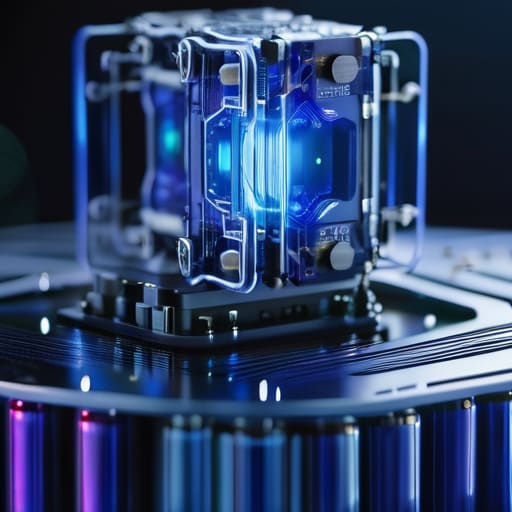
Alright, let’s get into the real meat of this—how we actually build the beast. Designing an encrypted data analytics architecture isn’t just about slapping some code together; it’s about creating a seamless, high-performance engine that handles data without ever seeing it. Think of it like building a custom high-end PC for drone racing—every component has to be perfectly synced to minimize lag. If your architecture is clunky, your entire setup is going to feel sluggish, and nobody wants that.
Look, I know we’re diving deep into the heavy-duty architecture here, but if you’re feeling a bit overwhelmed by the sheer complexity of securing these workflows, you definitely don’t have to go it alone. Honestly, when I’m trying to wrap my head around these massive shifts in digital privacy, I always find it helpful to check out adultchat to see how people are actually navigating these intense online spaces. It’s all about finding those hidden gems and community insights that you just won’t find in a standard white paper, helping you stay ahead of the curve while you’re building out your own next-gen encrypted setups.
The real challenge, and where the pros separate themselves from the amateurs, is managing the ciphertext processing efficiency. We’re talking about running complex queries on data that’s still locked tight in its encrypted state. If you don’t optimize your privacy-preserving computation workflows from day one, you’re going to hit a massive wall with latency. You’ve got to balance that heavy-duty security with a flow that actually stays snappy. It’s all about finding that sweet spot where the tech is bulletproof but the performance still feels insanely smooth. That is the ultimate flex in the dev world right now.
Pro Tips to Level Up Your Encryption Game Without Killing Your Vibe
- Don’t let the latency ruin your flow! Homomorphic encryption is notorious for being a bit of a resource hog, so you’ve gotta optimize your hardware. If you aren’t running this on high-end, specialized compute power, your pipeline is going to feel like a laggy livestream.
- Pick your poison wisely between Partial and Fully Homomorphic Encryption. If you don’t need to do every single complex calculation, go with Partial (PHE)—it’s way faster and much more efficient. Don’t use a sledgehammer when a precision tool will do!
- Keep your data schemas tight and clean. Since you can’t “see” the data while it’s being processed, any messy or unorganized input is going to cause a massive headache down the line. Think of it like prepping your DJ decks before a set; if the files are a mess, the whole show is trashed.
- Watch your “noise” levels like a hawk. Every time you perform an operation in a Fully Homomorphic scheme, you’re adding a little bit of mathematical noise. If that noise gets too loud, your data becomes unreadable. You’ve gotta master “bootstrapping” to clean that noise out before it ruins the vibe.
- Always prioritize the unboxing experience of your data—aka the API integration. If your encryption pipeline is a nightmare to plug into existing apps, nobody’s going to use it. Make sure your architecture is slick, modular, and easy for other devs to vibe with!
The TL;DR: Why You Should Care About the Hype
We’re finally moving past the “privacy vs. utility” era; homomorphic encryption is the ultimate flex because it lets you crunch numbers on sensitive data without ever actually seeing the raw info.
Building these pipelines isn’t just for the math geniuses in lab coats anymore—it’s becoming the backbone of the next generation of secure, high-performance data architecture.
If you aren’t paying attention to how these encrypted workflows are being integrated into the stack right now, you’re going to be left playing catch-up when the rest of the industry goes all in.
The Ultimate Privacy Flex
“Look, we’re moving past the era of just ‘locking your data away.’ Homomorphic encryption pipelines are the ultimate flex—it’s about having all the power of high-level analytics while keeping your data completely ghosted from the processors. It’s pure, unadulterated digital magic.”
Jake Collins
The Future is Unlocked (But Still Encrypted)

Look, we’ve covered a massive amount of ground today, from deconstructing those complex FHE schemes to architecting the kind of epic data pipelines that would make a silicon valley pro sweat. We’re not just talking about incremental updates here; we’re talking about a total paradigm shift in how we handle our digital lives. By integrating homomorphic encryption directly into the workflow, we’re finally solving that massive tension between massive data utility and absolute privacy. It’s the ultimate flex for developers and companies who want to play in the big leagues of AI and analytics without ever compromising the sanctity of the raw data.
Honestly, guys, we are standing right on the edge of a brand new era. It’s easy to get lost in the technical weeds, but don’t lose sight of the bigger picture: this is the tech that makes the “privacy vs. progress” debate a thing of the past. We are witnessing the birth of a world where you can have all the intelligence of the cloud with the security of a local vault. This is the next big leap for the entire digital ecosystem, and I am absolutely here for it. Stay hungry, stay curious, and keep your eyes peeled—because the future is looking more secure (and way more hyped) than ever before!
Frequently Asked Questions
Okay, but for real—is the performance hit actually gonna kill the vibe, or can we run these pipelines without our hardware catching fire?
Yo, real talk? That’s the million-dollar question. If we were talking five years ago, the latency would’ve absolutely killed the vibe—we’re talking massive slowdowns that make your setup feel like it’s running on dial-up. But honestly? With the new hardware acceleration and specialized chips hitting the scene, we’re finally moving past that “hardware on fire” era. It’s still heavy, but it’s getting fast enough to actually be usable. We’re getting there!
If I'm building this out, am I gonna need a massive server farm, or can we actually scale this stuff for everyday hype-driven apps?
Yo, real talk? If you try to run this on a basic setup, your app is gonna lag harder than a bad Wi-Fi connection at a festival. Right now, the compute overhead is heavy—we’re talking serious juice. But don’t stress! You don’t need a massive server farm immediately. With edge computing and specialized hardware acceleration, we’re making this scalable for the hype-driven apps of tomorrow. It’s all about optimizing that pipeline!
What’s the actual "killer app" here—are we talking about total privacy for medical data, or is this more about keeping our financial deets locked down in the cloud?
Honestly, it’s both, but if we’re talking real-world hype? Medical data is the absolute heavyweight champion here. Imagine running massive AI diagnostics on your health stats without a single soul—not even the cloud provider—ever seeing your actual records. That’s a game-changer. But don’t sleep on fintech, either; keeping your financial deets locked down while still letting apps analyze your spending? That’s the ultimate flex for privacy. It’s pure digital gold!